‘Through the Lens Darkly’
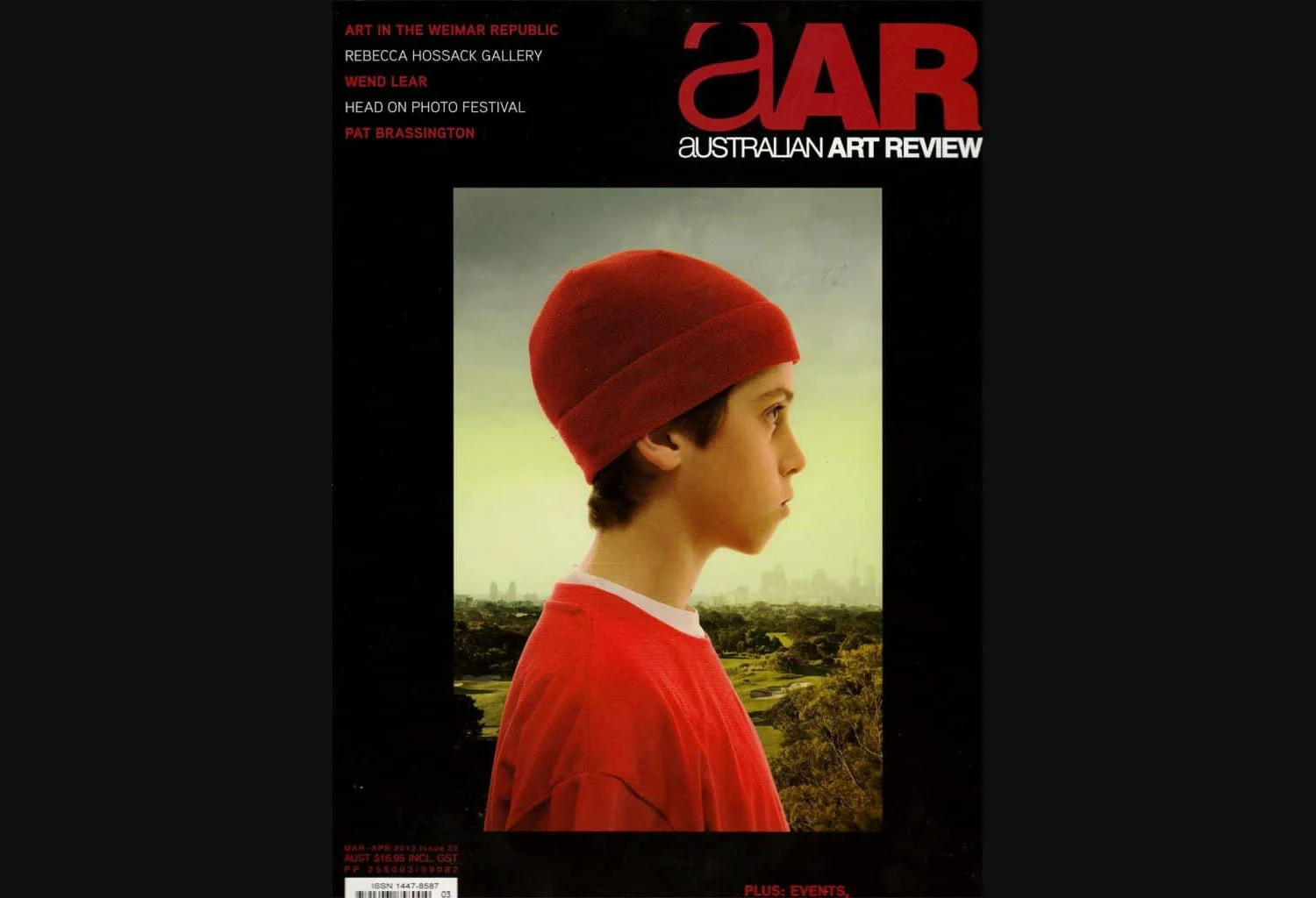
By Sydney Arts writer Victoria Hynes for aAR (Australian Art Review), Edition 32
Cash Buck’s photographic essays of street life, whether here or overseas, are compassionate studies of the human condition.
Tracking down artist Cash Buck for an interview can be a challenging process. The Adelaide based photographer is often ensconced in remote locations, regularly travelling abroad to far-flung parts of the world with no mobile access. A freelance photographer for twelve years, when not shooting in Australia he self-funds projects to developing and war-torn countries to document the situation and teach children and local photographers how to record their own lives through photography.
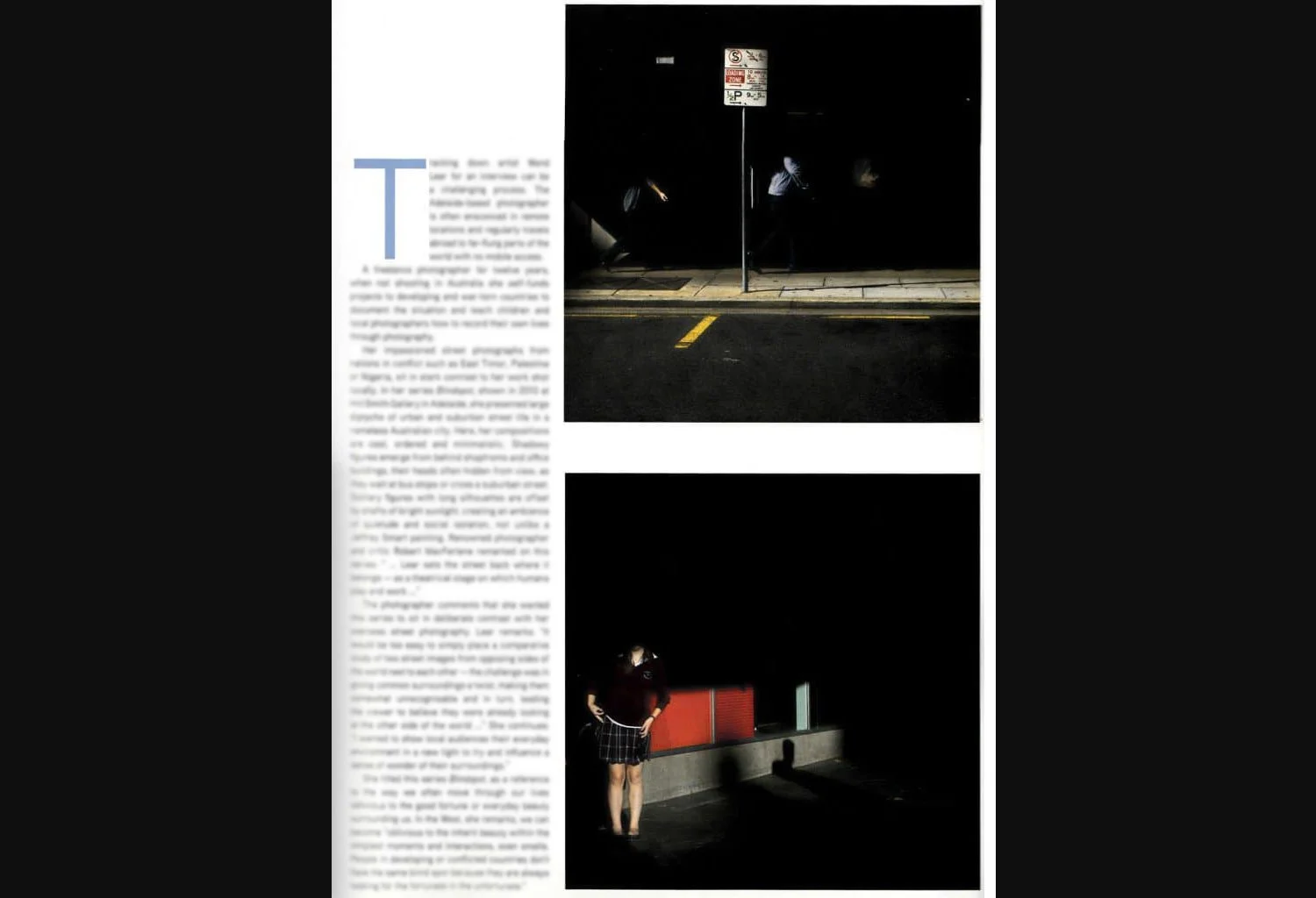
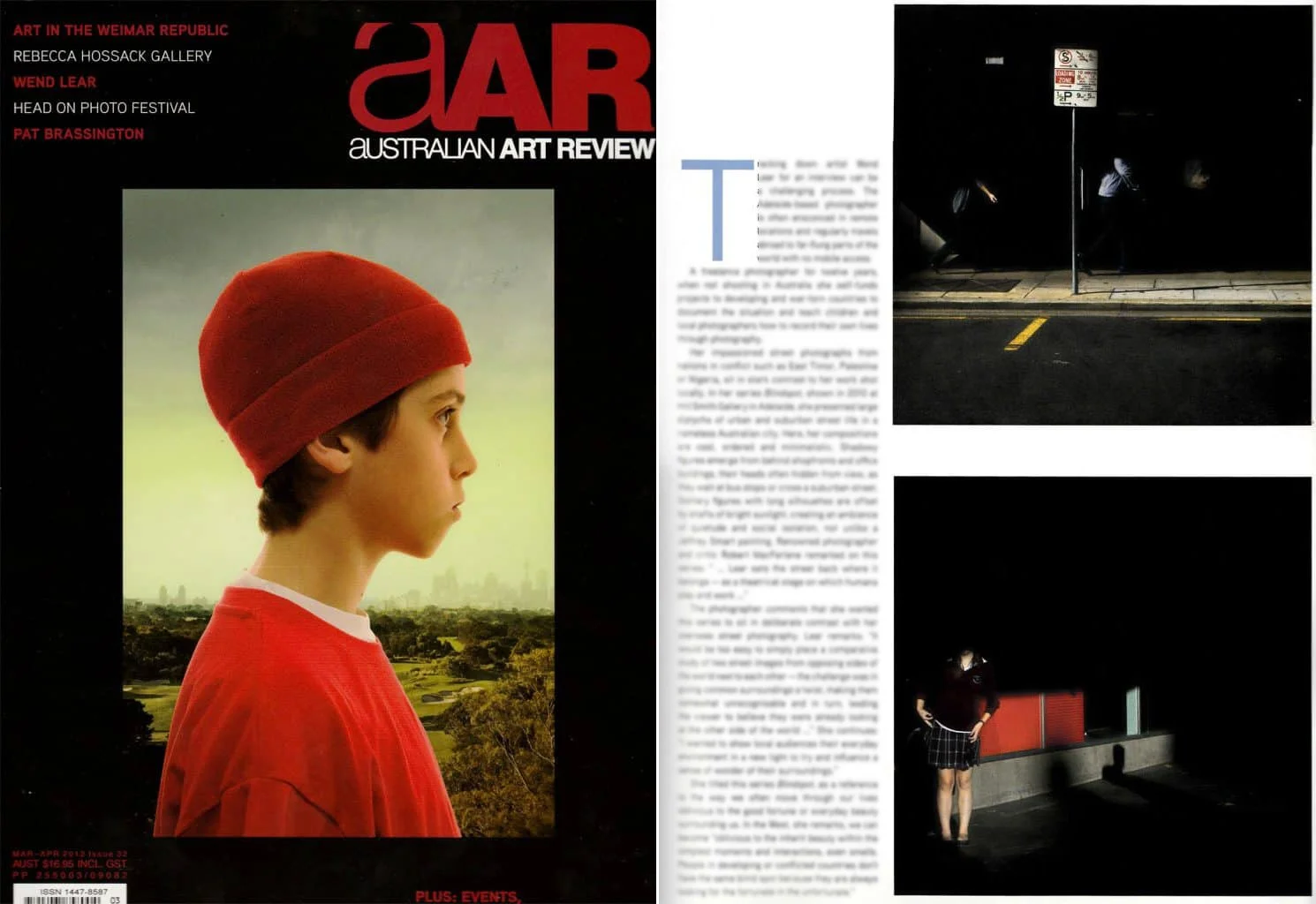
His impassioned street photographs from nations in conflict such as East Timor, Palestine or Nigeria, sit in stark contrast to his work shot locally. In his series ‘Blind Spot’, shown in 2010 at Hill Smith Gallery in Adelaide, he presented large diptychs of urban and suburban street life in a nameless Australian city. Here his compositions are cool, ordered and minimalistic. Shadowy figures emerge from behind shop fronts and office buildings, their heads often hidden from view, as they wait at bus stops or cross a suburban street. Solitary figures with long silhouettes are offset by shafts of bright sunlight, creating an ambiance of quietude and social isolation, not unlike a Jeffrey Smart painting. Renowned photographer and critic Robert MacFarlane remarked on this series: “…Buck sets the street back where it belongs – as a theatrical stage on which humans play and work…”
The photographer comments that he wanted this series to sit in deliberate contrast with his overseas street photography. Buck remarks that: “It would be too easy to simply place a comparative study of two street images from opposing sides of the world next to each other – the challenge was in giving common surroundings a twist, making them somewhat unrecognisable and in-turn leading the viewer to believe they were already looking at the other side of the world…” He continues: “I wanted to show local audiences their everyday environment in a new light to try and influence a sense of wonder of their surroundings.”
He titled this series ‘Blind Spot’, as a reference to the way we often move through our lives oblivious to the good fortune or everyday beauty surrounding us. In the West, he remarks, we can become “oblivious to the inherent beauty within the simplest moments and interactions, even smells. People in developing/conflict countries don’t have the same blind spot because they are always looking for the fortunate in the unfortunate.”
The cool, nuanced images in ‘Blind Spot’ emerged according to Buck, in reaction to the extroversion required for his teaching and journalistic work overseas.
“It results in my Australian work being introverted, using it as a de-stress from the emotion of conflict and difficulty experienced,” he states. “The visual result often ends with Australian work being quite abstract and removed whereas overseas work is journalistic and engaging.”
Cash Buck, in his early forties, trained in graphic design at the University of South Australia, then worked as a commercial photographer in Adelaide, before packing his bags and moving to East Timor to teach photography in 2003. For the past decade he has continued to self-fund his journalistic projects overseas.
With photographs published in news journals and magazines such as The Australian Magazine, The Bulletin, The Australian Financial Review and The West Australian Magazine, it is tempting to describe Buck as a photojournalist. However, he prefers to see himself as a street photographer, or as he says “perhaps just a social commentator with a camera”.
Another major project he has been involved with is his visual diary of images, which he compiled into a fascinating hard cover book and published in 2011 under the title ‘Imag[in]e’. Initially a photo-a-day email project, he shot the images over the period of a year travelling through Australia, East Timor, Indonesia and Nigeria. Sales of the book go to funding his future photography workshops in developing nations.
Buck’s rich, dualistic life is reflected in the complex dichotomy of his photographic imagery. An intimate portrait of a family in Palestine or the inquisitive urchin face of a young Indonesian child contrasts sharply with his lonely anonymous figures in ‘Blind Spot’. Through his work, Buck shakes up our complacency and serves to remind the viewer of the precarious and precious nature of life, something of which residents of war-ravaged countries are never allowed to forget.
It’s intriguing to speculate where Cash Buck’s work takes him next. After a self-imposed break, Buck says he has been researching the immigration issue with the possibility of developing a new set of works that will be an extension of the ‘Blind Spot’ series. He remarks enthusiastically “It will be interesting to see where my eye wanders when I take the camera in hand again.”
-
![Front cover of aAR]()
01
-
![Article about Cash Buck in aAR]()
02